
Evolve Collision Centers
2560 Haverford Road
Ardmore, PA 19003
Email: info@evolvecollision.com
Phone: (267) 692-6699
Why ADAS Calibration Is Critical After a Collision

Summary
- ADAS systems rely on precise calibration to function correctly after repairs
- Even minor collisions can misalign sensors and cameras
- Driving without calibration can compromise safety features like braking and lane assist
- Calibration costs vary depending on vehicle technology and damage severity
- Proper calibration ensures your vehicle performs as designed by the manufacturer
Modern vehicles are equipped with advanced safety features that many drivers rely on every day without even thinking about it. Systems like automatic emergency braking, lane departure warnings, and adaptive cruise control are designed to help prevent accidents and keep you safe on the road.
However, what many drivers do not realize is that these systems depend on precise alignment to function properly. Even a minor collision can throw them off.
In this guide, we will explain what ADAS calibration is, why it is necessary after a collision, how much it costs in Pennsylvania, and what can happen if it is skipped.
What Is ADAS Calibration
ADAS stands for Advanced Driver Assistance Systems. These systems use cameras, radar, and sensors placed around your vehicle to monitor your surroundings and assist with driving.
Common ADAS Features
- Forward collision warning
- Automatic emergency braking
- Lane departure warning
- Blind spot monitoring
- Adaptive cruise control
ADAS calibration is the process of adjusting and aligning these sensors to ensure they are working accurately according to manufacturer specifications.
When repairs are completed through collision repair services, technicians must ensure that all safety systems are properly recalibrated so the vehicle performs as intended.
Why ADAS Calibration Is Necessary After a Collision
Even small impacts can affect sensor alignment.
Sensor Misalignment
Cameras and radar sensors are extremely sensitive. A slight shift in position can cause inaccurate readings.
Part Replacement
Replacing windshields, bumpers, or mirrors can require recalibration because sensors are often mounted in these areas.
Structural Repairs
Frame or body repairs can change sensor positioning.
According to the National Highway Traffic Safety Administration, advanced safety systems must function correctly to reduce crash risks and improve driver safety.
Cost of ADAS Calibration in Pennsylvania
One of the most common questions is cost.
Typical Cost Ranges
- Basic calibration: $150 to $300
- Advanced multi-system calibration: $300 to $1,000+
What Affects Cost
Number of Sensors
More systems require more calibration steps.
Vehicle Make and Model
Luxury vehicles often have more advanced systems.
Type of Calibration
Static calibration uses specialized equipment, while dynamic calibration requires driving the vehicle under specific conditions.
Additional Repairs
Structural repairs may increase complexity.
If your vehicle also requires structural work, services like scanning and calibration services are often integrated into the repair process to ensure all systems function correctly.
Problems and Risks of Skipping ADAS Calibration
Skipping calibration can create serious safety risks.
Incorrect Emergency Braking
The system may not activate when needed or could activate unexpectedly.
Lane Assist Errors
Your vehicle may drift without warning or give false alerts.
Adaptive Cruise Control Issues
Distance tracking may become inaccurate.
Increased Accident Risk
Faulty systems can give drivers a false sense of security.
The Insurance Institute for Highway Safety emphasizes that properly functioning ADAS systems significantly reduce crash rates when calibrated correctly.
Static vs Dynamic Calibration
Understanding the difference between static and dynamic calibration helps you know exactly what your vehicle needs after a collision. Both methods are essential for ensuring your ADAS systems function correctly, and in many cases, they are used together to achieve complete accuracy.
Static Calibration
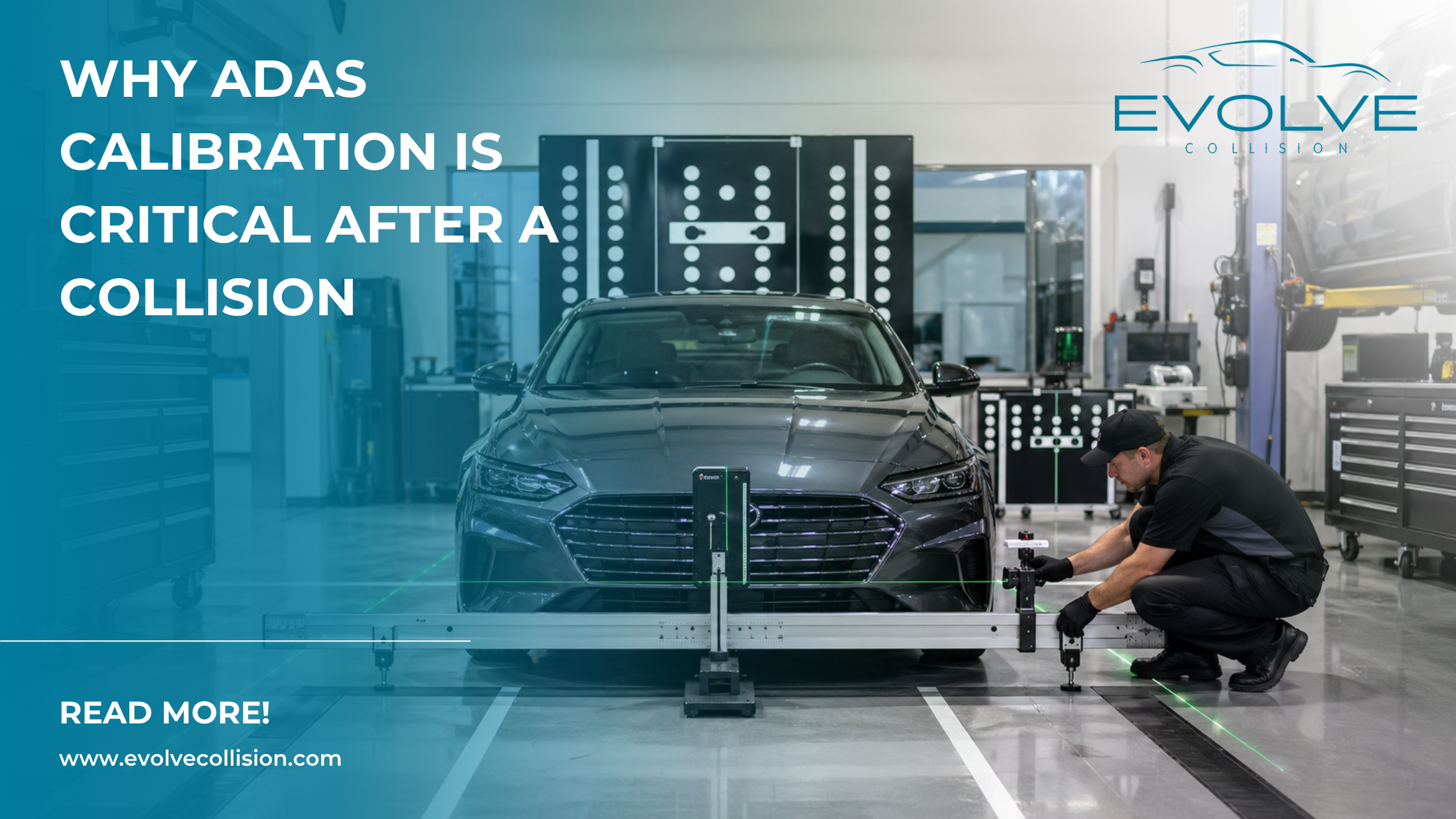
Static calibration is performed in a controlled environment, typically inside a repair facility. Technicians use manufacturer-specific targets, alignment tools, and specialized equipment to recalibrate sensors and cameras. This process requires extremely precise measurements, including exact distances, angles, and positioning. Even small errors can affect how systems interpret their surroundings, which is why controlled conditions are critical.
Dynamic Calibration
Dynamic calibration is performed while driving the vehicle under specific conditions. This allows the system to recalibrate using real-world inputs such as lane markings, traffic flow, and road conditions. Technicians may need to drive at certain speeds or on specific types of roads to complete the process correctly.
Why Both Are Important
Many modern vehicles require both static and dynamic calibration to ensure full system accuracy. Static calibration sets the baseline, while dynamic calibration fine-tunes the system in real-world conditions. Skipping either step can lead to incomplete calibration, which may impact how safety features respond when you need them most.
Best Practices After ADAS-Related Repairs
If your vehicle has ADAS features, following the right steps after a collision is essential to ensure your safety systems are working exactly as intended. These technologies are highly sensitive, and even small misalignments can impact performance, so taking a proactive approach helps protect both your vehicle and your safety.
Confirm Calibration Is Included
Always ask if calibration is part of the repair process. Not all shops automatically include it, and missing this step can leave critical systems like emergency braking or lane assist functioning incorrectly.
Choose a Qualified Shop
Look for shops with the proper equipment, certified technicians, and experience working with advanced safety systems. ADAS calibration requires specialized tools and controlled environments, so choosing the right shop makes a significant difference in accuracy.
Request Documentation
Proof of calibration ensures the work was completed correctly. Many shops provide reports showing that each system was tested and verified, which can also be helpful for insurance claims or future resale.
Do Not Skip the Process
Skipping calibration can compromise safety systems and create a false sense of security while driving. What may seem like a small oversight can have serious consequences in real-world situations.
Schedule Follow-Up Checks
In some cases, it is beneficial to have systems rechecked after a short period of driving. This ensures that everything continues to function properly and that no additional adjustments are needed.
Understand Your Vehicle’s Features
Take time to familiarize yourself with how your ADAS systems operate after repairs. Knowing how they should respond can help you quickly identify if something feels off.
Shops that specialize in advanced systems, such as those offering OEM-certified repairs, follow manufacturer procedures to ensure proper calibration and safety.
What Customers Value in ADAS Calibration
When it comes to advanced safety systems, customers care deeply about trust and accuracy, especially because these features are designed to prevent accidents and protect lives. Unlike cosmetic repairs, ADAS calibration directly impacts how a vehicle responds in critical situations, which makes confidence in the process extremely important.
Safety Confidence
Drivers want assurance that their safety systems will work exactly as intended when needed. Whether it is automatic emergency braking or lane keeping assist, customers expect these features to respond accurately in real-world driving conditions without hesitation or error.
Clear Communication
Understanding what calibration involves helps build trust. Customers appreciate it when repair shops explain why calibration is necessary, what systems are affected, and how the process ensures their vehicle is safe again.
Proper Equipment
Customers expect shops to use manufacturer-approved tools and follow OEM procedures. Modern vehicles require precise calibration environments, and using the right equipment is essential for accurate results.
Documentation
Proof that calibration was completed is increasingly important. Many customers want records showing that all systems were tested and verified, especially for insurance purposes or future resale.
Long Term Reliability
Customers want confidence that their systems will continue working correctly long after the repair is complete. Reliable calibration reduces the risk of future issues or system failures.
Consistency and Expertise
Customers also value technicians who are properly trained and experienced in working with advanced vehicle systems. Consistent results across different repairs reinforce trust and demonstrate a shop’s commitment to quality.
Organizations like I-CAR emphasize the importance of proper calibration procedures and technician training for modern vehicle safety systems.
FAQs About ADAS Calibration
Q: What is ADAS calibration, and why is it important?
A: ADAS calibration ensures that your vehicle’s safety systems are properly aligned and functioning correctly after repairs or a collision. Without proper calibration, features like automatic braking and lane assist may not respond accurately when you need them most.
Q: Do all vehicles need ADAS calibration after a collision?
A: Not all vehicles require calibration, but most modern cars equipped with cameras and sensors do after repairs. Even minor impacts or part replacements can affect system accuracy and require recalibration.
Q: How do I know if my car needs calibration?
A: If your vehicle has ADAS features and has been involved in a collision or had components like a windshield or bumper replaced, calibration is likely necessary. A professional inspection is the best way to confirm whether your systems are properly aligned.
Q: How much does ADAS calibration cost in Pennsylvania?
A: Costs typically range from $150 to over $1,000, depending on the number of systems and the complexity of the vehicle. More advanced vehicles with multiple sensors and cameras may require additional calibration steps, increasing the cost.
Q: Can I skip ADAS calibration?
A: No, skipping ADAS calibration can lead to malfunctioning safety systems that may not respond correctly in critical situations. This can increase the risk of accidents and reduce the effectiveness of your vehicle’s built-in safety features.
Q: How long does ADAS calibration take?
A: ADAS calibration can take anywhere from a few hours to a full day, depending on the system requirements. More complex vehicles or those needing both static and dynamic calibration may take longer to complete.
Q: Does insurance cover ADAS calibration?
A: In most cases, insurance will cover ADAS calibration if it is part of a necessary repair after a covered accident. It is always best to check with your provider to understand your specific coverage and deductible.
Q: What happens if ADAS is not calibrated properly?
A: If ADAS is not calibrated correctly, systems may give false warnings or fail to activate when needed. This can compromise your safety and create a false sense of security while driving.
Get Your Vehicle’s Safety Systems Checked the Right Way
After a collision, repairing visible damage is only part of the process. Ensuring your vehicle’s safety systems are working correctly is just as important.
ADAS calibration is not optional for modern vehicles. It is a critical step in restoring your car to its original safety standards.Visit us at 2560 Haverford Rd, Ardmore, PA 19003, or contact the team today to schedule your estimate and ensure your vehicle is fully repaired and safe to drive.